
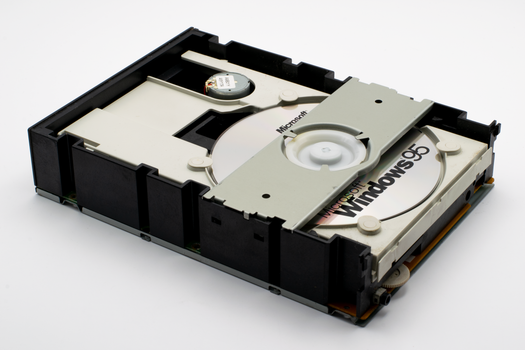
Thousands of companies run their entire operation on a system nobody wants to touch anymore. It might be a Delphi ERP from 2008, a VB6 application that only runs on one specific machine, a tangle of spreadsheets, or old PHP maintained by a developer who left years ago. Legacy system modernization has stopped being an IT project and become a business decision: the cost of keeping the old system alive is almost always higher than the number on the invoice.
This guide shows how to recognize a legacy system, what it really costs, which modernization strategies are available, and how to migrate without downtime. The goal is to give decision-makers objective criteria for when to modernize, when to rewrite, and when to leave things alone.
In this article
- What defines a legacy system
- The real cost of maintaining a legacy system
- Legacy system modernization strategies
- How to plan modernization without downtime
- When a full rewrite is worth it (and when it is not)
- Frequently asked questions
What defines a legacy system
Legacy does not simply mean old. Software can be ten years old and still healthy if it received maintenance, tests, and dependency updates. What makes a system legacy is the combination of technical factors that make change expensive, slow, and risky.
In practice, the objective signs that you are dealing with a legacy system are:
- Unsupported stack: a language, framework, or database at end of life (Delphi 7, VB6, PHP 5, old .NET Framework, database versions past vendor support).
- No automated tests: every change requires manual testing and hope, because nobody knows what else might break.
- Dependence on a single person: only one professional (sometimes already gone) understands how the system works inside.
- Incompatibility with mobile and cloud: the system only runs on desktop, needs local installation, or exposes no APIs to integrate with other tools.
- Missing or outdated documentation: business logic lives in the code and in people's heads, not in documents.
The more of these signs are present, the greater the risk of postponing the decision. A system that combines several of them is not just aging: it is becoming a single point of failure for the operation.
The real cost of maintaining a legacy system
The visible spend on a legacy system (license, server, one developer on standby) is the smallest part of the bill. According to Gartner, between 60% and 80% of the IT budget at most companies is consumed just to keep existing systems running, leaving little for innovation. That imbalance is the first hidden cost: every dollar locked in maintenance is a dollar that never becomes competitive advantage.
The second cost is accumulating technical debt. The Consortium for Information and Software Quality (CISQ) estimated the cost of poor software quality in the United States at US$ 2.41 trillion in 2022, of which roughly US$ 1.52 trillion corresponds to accumulated technical debt. Stripe's Developer Coefficient report found that developers spend about 42% of their time dealing with technical debt and maintenance, hours that never turn into new product.
Three more risks rarely make it onto the spreadsheet:
- Security: unsupported stacks stop receiving fixes. Known vulnerabilities (CVEs) stay open because there is no official patch, exposing the company to breaches and ransomware.
- Talent loss: skilled developers avoid maintaining obsolete technology. Hiring and retaining people who know Delphi or VB6 gets more expensive and harder every year.
- Business paralysis: when the system will not integrate with payments, mobile, BI, or AI, every new market opportunity hits the same technical wall.
Research reported by CIO Dive shows companies spent, on average, nearly US$ 3 million in the past year dealing with legacy technology upgrades and technical debt. Added together, these factors explain why the cost of doing nothing is usually the highest of all.
Legacy system modernization strategies
There is no single way to modernize. Gartner formalized a set of strategies (originally five, today often described as the 7 Rs) that give teams a shared vocabulary for deciding what to do with each application. In practice, five approaches cover most small and mid-sized company cases:
| Strategy | What it is | Effort / Risk | When to use |
|---|---|---|---|
| Encapsulate (API) | Keep the system as is and expose its functions through an API, without touching the internal code. | Low / Low | When the legacy works well but needs to integrate with new channels (mobile, partners, AI). |
| Rehost (lift and shift) | Move the system to modern infrastructure (cloud) without changing the code. | Low / Low | When the immediate goal is leaving a physical server and gaining scalability and backup. |
| Replatform | Targeted tweaks to take advantage of the new platform (managed database, containers), without rewriting the logic. | Medium / Low | When small changes unlock large cost or performance gains. |
| Refactor | Restructure the code internally: break the monolith into modules, reduce coupling, add tests, without changing external behavior. | Medium-high / Medium | When the system has a long-term future but the codebase has become hard to evolve. |
| Rebuild (rewrite) | Rebuild the solution with current architecture, language, and patterns, preserving the business logic. | High / High | When the technology is discontinued and the cost of maintaining exceeds the cost of rebuilding. |
The choice is rarely binary. It is common to combine strategies: encapsulate the legacy with an API to unlock a mobile app now while refactoring the most critical modules over time. To understand how a custom rebuild differs from off-the-shelf software, see our guide to custom software development.
How to plan modernization without downtime
The biggest fear for anyone who depends on a legacy system is legitimate: stopping the operation to swap out the foundation. The good news is that modern practices were designed precisely to avoid that scenario. Migration does not need to (and should not) happen in a single event.
Incremental migration with the Strangler Fig pattern
The Strangler Fig pattern, described by Martin Fowler, is the reference for modernizing without a big bang. The idea is to place a layer (a facade) in front of the old system that intercepts requests and decides, function by function, whether to serve them from the legacy or from the new migrated module. Little by little, the new system wraps the old one until the legacy can be safely shut down. Microsoft's architecture documentation details how to implement this facade in practice.
Run in parallel and migrate data carefully
During the transition, legacy and new system coexist. This lets you validate each migrated module against the old system's real behavior before flipping the switch. Data migration deserves special attention: mapping the schema, cleaning up historical inconsistencies, and running test loads prevents years of critical data from being lost or corrupted at cutover.
Companies without an internal team to run this process often turn to specialized partners. Our guide to IT outsourcing helps you assess when it makes sense to outsource modernization. Keep in mind that modernizing is also what unlocks new capabilities: a modern, API-first foundation is the prerequisite to add AI to an existing system without hacks.
Companies that need a technical diagnosis before deciding can talk to a specialized technical team to map the legacy and design the safest strategy.
When a full rewrite is worth it (and when it is not)
A full rewrite (rebuild) is the most expensive and riskiest strategy, which is why it should be the exception, not the rule. McKinsey research on modernization projects shows that 45% of them exceed the initial budget and 7% overshoot the timeline by more than 200%. The main culprit is the big bang rewrite: trying to replace everything at once, which tends to fail because of the hidden complexity of business rules and the impossibility of freezing the system's evolution for years.
A rewrite from scratch tends to be worth it when:
- The technology is discontinued with no viable upgrade path.
- The architecture is so compromised that every change creates new bugs.
- The accumulated cost of maintaining the legacy already exceeds the cost of rebuilding with current criteria.
- The business model has changed and the old system cannot support what the company needs to offer.
It is better NOT to rewrite from scratch when:
- The system still supports critical processes and holds years of validated business logic.
- There are many production integrations that would need to be rebuilt simultaneously.
- There is not enough documentation to safely reconstruct the behavior.
In those cases, combining encapsulation with incremental refactoring delivers more value with far less risk. If the business model outgrew the old tool, it is worth evaluating whether a custom management system solves it better. Modern AI-assisted development also speeds up reconstruction and changes the cost math; see what actually works in building an app with AI. At FWC Tecnologia we have modernized and built mission-critical platforms for industry and services, such as Solvace, a management platform for industrial operations, and Wehandle, a service management system, pairing consolidated business logic with a modern, mobile, integration-ready architecture. With more than 30 apps delivered and over six years on the road, experience shows the right call is almost never all or nothing.
Frequently Asked Questions
What is a legacy system?
A legacy system is software whose technology, architecture, or dependencies make change expensive, slow, and risky. It is not just about age: what defines a legacy is an unsupported stack, the absence of tests, dependence on a single person, and incompatibility with mobile and cloud.
When should I modernize an old system?
The moment arrives when the cost of maintaining the system exceeds the cost of evolving it. Clear signs are steadily rising maintenance costs, frequent failures, difficulty hiring people to support the technology, and the inability to integrate new channels like mobile, payments, or AI. Delaying only grows the technical debt.
How much does it cost to modernize a legacy system?
The cost varies by strategy: encapsulating via API and rehosting are cheaper, while refactoring and rewriting require more investment. What usually gets expensive is the opposite: doing nothing. Companies are estimated to spend 60% to 80% of their IT budget just keeping old systems running.
Is it better to modernize or rewrite the system from scratch?
In most cases, incremental modernization delivers more value with less risk than rewriting everything at once. A full rewrite is only worth it when the technology is discontinued or the architecture is too compromised. Research shows that 45% of rewrite projects exceed their budget.
Is it possible to modernize without stopping the operation?
Yes. The Strangler Fig pattern lets you migrate function by function while the old system keeps running. An intermediate layer routes each request to the legacy or to the new migrated module, until the old one can be safely shut down. The operation never has to stop.
Next Step
Request a quote or get a price estimate for your project.