
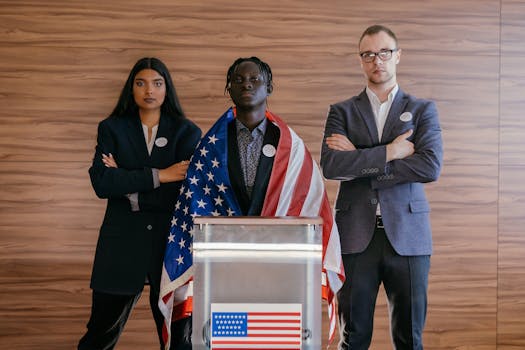
The 2026 elections will be the most digital in Brazil's history. With the first round set for October 4, 2026, candidates who fail to invest in their own technology will fall behind. In this article, we cover the essential features of an election campaign app, how much it costs to build one, and why FWC Tecnologia is the ideal partner to bring your project to life.
In This Article
- Why candidates need a campaign app in 2026
- Essential features of an election app
- Off-the-shelf SaaS vs. custom development
- Ideal tech stack for election apps
- Legal compliance: LGPD and TSE rules
- How much does it cost to build a campaign app
- Why choose FWC Tecnologia
- Frequently asked questions
- Next step
Why Candidates Need a Campaign App in 2026
Brazilians spend an average of 4 hours and 45 minutes per day connected to the internet on their phones. Social media, messaging apps, and video platforms are the primary channels for consuming information. For candidates, this means the voter is literally in their pocket.
But relying solely on social media carries real risks. Algorithms change without warning, accounts can be suspended, and organic reach shrinks every year. A dedicated app eliminates these intermediaries: you control the communication, the data, and the voter experience.
Furthermore, Brazil is the second fastest-growing country in app development worldwide. The electorate is already accustomed to handling everything on their phones — from delivery orders to medical appointments. A well-built campaign app is not a luxury; it is basic infrastructure for anyone who wants to compete in 2026.
Digital engagement has also become a legal obligation. The TSE has regulated the use of artificial intelligence in campaigns, requiring transparency and traceability. Having your own app makes compliance easier, since you have full control over the content being distributed.
Essential Features of an Election App
An effective election campaign app goes far beyond a digital flyer. These are the features that make the difference between an amateur campaign and a professional operation:
Voter CRM
The heart of the app is the political CRM. It records supporter data, interaction history, preferences, and engagement levels. With smart segmentation, you send the right message to the right audience. At FWC, we have built robust CRM systems — Solvace, for example, is a service management platform that handles thousands of simultaneous interactions with real-time dashboards.
Geolocation and Mapping
Knowing where your voters are is just as important as knowing who they are. Geolocation features allow you to map high-support regions, plan rallies, identify priority neighborhoods, and direct field workers with precision. We have already delivered this kind of solution: Pato Delivery uses real-time tracking with interactive maps — the same technology we apply to election apps.
Real-Time Analytics and Dashboards
Campaign decisions should be data-driven, not intuition-based. A real-time analytics dashboard shows engagement metrics, base growth, content performance, and voter sentiment. This allows you to adjust your strategy daily — or even hourly during critical moments.
Segmented Communication
Push notifications, in-app messages, and WhatsApp Business integration enable direct, personalized communication. Segmentation by region, age group, interests, and engagement level ensures relevance. Generic messages don't convert — segmented communication does.
Integrated Polling
Quick in-app polls generate proprietary data on voting intention, voter priorities, and candidate perception. This data complements traditional polls and enables real-time reaction to shifting scenarios.
Intelligent Chatbot
An AI-powered chatbot answers frequently asked questions, collects contact information, and routes requests to the campaign team. It reduces operational workload and keeps voters engaged 24/7. At FWC, we have already integrated AI into projects like Cota AI, which uses artificial intelligence to automate complex quotation processes.
To learn more about how AI is transforming the 2026 elections, check out our article on technology and AI in the electoral process.
Off-the-Shelf SaaS vs. Custom Development: Which to Choose
There are SaaS solutions on the market — LideraAI, Elegis, Mobby Candidato, Onda Eleitoral, and Pro-Politico — that offer ready-made campaign features. But do they meet your needs?
| Criteria | Off-the-Shelf SaaS | Custom Development |
|---|---|---|
| Initial cost | Low (monthly subscription) | Higher (one-time investment) |
| Customization | Limited to what the platform offers | Total — features on demand |
| Data ownership | Data on vendor's infrastructure | Data 100% under your control |
| Scalability | Depends on the plan | Unlimited — your own infrastructure |
| Visual identity | Standardized templates | Exclusive campaign design |
| System integration | Limited APIs | Integration with any system |
| Competitive edge | Same app your opponent uses | Exclusive features |
| LGPD/TSE compliance | Depends on the vendor | Full control over compliance |
When custom development is worth it: campaigns for executive offices (mayor, governor, president), campaigns with budgets above R$ 500,000, candidates who need specific features not available in SaaS, and campaigns that require full control over voter data for LGPD reasons.
For smaller campaigns — city council in small towns, for instance — a SaaS may suffice. But if you want a real competitive edge, custom development is the way to go.
Want to estimate the investment? Use our app price calculator for an initial estimate, or request a detailed quote from our team.
Ideal Tech Stack for Election Apps
Technology choices directly impact delivery time, maintenance costs, and app performance. For election apps, our recommendation is:
Mobile Frontend: React Native
React Native allows you to develop for iOS and Android simultaneously with a single codebase. This reduces costs by up to 40% compared to separate native development and accelerates time-to-market — a critical factor when the electoral calendar waits for no one. To better understand the differences, see our comparison of native, hybrid, and cross-platform apps.
Backend: Node.js with RESTful APIs
Node.js offers high performance for real-time applications — exactly what an election app needs for dashboards, notifications, and chat. The event-driven architecture supports thousands of simultaneous connections without degradation.
Database and Infrastructure: Firebase + Cloud
Firebase (Firestore, Authentication, Cloud Messaging, Storage) accelerates development with managed services. For campaigns that need to scale quickly during engagement spikes — such as debates or breaking news — cloud infrastructure ensures availability.
Push Notifications
Firebase Cloud Messaging (FCM) for segmented push notifications. Integrated with the CRM, it enables personalized alerts by region, demographic profile, or engagement level.
This is the same stack we use at FWC to deliver over 30 applications in the past 6 years. To understand our complete process, check out the guide on how to build an app from scratch.
Legal Compliance: LGPD and TSE Rules for Election Software
Building an election campaign app without considering the legal framework is an enormous risk. The rules for 2026 are the strictest in history.
AI Regulation by TSE
The TSE has established clear rules for the use of artificial intelligence in election campaigns. All AI-generated or AI-modified content must receive mandatory labeling, clearly identifying it as technology-assisted. The use of deepfakes and synthetic content that simulates candidates or false situations is expressly prohibited.
72-Hour Digital Blackout
In the 72 hours before the election, paid electoral advertising on the internet is prohibited. The app must have mechanisms to automatically disable paid campaigns and boosted content during this period. Violating this rule results in fines of R$ 5,000 to R$ 30,000.
LGPD and Voter Data
Brazil's General Data Protection Law (LGPD) applies fully to election campaigns. This means explicit consent for data collection, the right to deletion, encryption in transit and at rest, and a transparent privacy policy. For a deeper dive, see our article on LGPD rules and data security.
A custom-built app makes compliance easier because you have full control over how data is collected, stored, and processed — unlike third-party SaaS where you depend on the vendor's practices.
How Much Does It Cost to Build a Campaign App
The investment varies based on complexity, number of features, and delivery timeline. These are the ranges practiced in the Brazilian market in 2026:
| Scope | Features | Estimated Investment | Timeline |
|---|---|---|---|
| Essential MVP | Basic CRM, push notifications, event calendar, news feed | R$ 35,000 - R$ 60,000 | 30-45 days |
| Intermediate App | MVP + geolocation, analytics, integrated polling, simple chatbot | R$ 60,000 - R$ 120,000 | 45-75 days |
| Full Platform | Intermediate + AI, complete admin panel, social media integration, web portal | R$ 120,000 - R$ 250,000 | 75-120 days |
Factors That Influence Cost
- Number of platforms: iOS + Android + web panel increases scope
- AI integration: chatbots and sentiment analysis require specialized development
- Data volume: campaigns with millions of voters need robust infrastructure
- Timeline: urgent projects may require a larger dedicated team
- Legal compliance: properly implementing LGPD and TSE rules requires expertise
For a personalized estimate, we recommend two paths: our app price calculator for a quick idea, or the full article on how much it costs to develop an app in 2026. To understand the MVP strategy, also see how much an MVP costs and how to validate your idea.
Why Choose FWC Tecnologia
Over the past 6 years, FWC Tecnologia has delivered over 30 applications impacting more than 500,000 users. Our experience covers exactly the technologies and challenges that an election app demands.
Relevant Case Studies
Cota AI — AI-powered quotation app. Demonstrates our ability to deploy AI in production, the same technology that powers chatbots and sentiment analysis in election apps.
Pato Delivery — Logistics platform with real-time tracking and interactive maps. The geolocation technology from this project is identical to what we use for electoral mapping and field worker coordination.
Desconto Premiado — Fintech app with cashback and user engagement features. The gamification and engagement mechanics of this app are directly applicable to voter and supporter mobilization.
Solvace — Service management platform with integrated CRM and real-time dashboards. The same CRM architecture we built for Solvace is what we deliver as a political CRM for campaigns.
Our Differentials
- AI expertise: we integrate artificial intelligence in production, not just prototypes. Check out our AI development page.
- 30 to 120-day projects: proprietary methodology that ensures fast delivery without sacrificing quality
- Modern stack: React Native, Node.js, Firebase — the same combination used by apps with millions of users
- Post-launch support: we don't disappear after delivery. We support your app throughout the entire campaign
- Complete team: designers, mobile developers, backend engineers, and QA — all in-house
Learn more about FWC Tecnologia and see why we are the choice of companies and entrepreneurs across Brazil.
Frequently Asked Questions
How long does it take to develop an election campaign app?
A functional MVP can be delivered in 30 to 45 days. Apps with full features — including AI, geolocation, and admin panel — take 75 to 120 days. With the first round in October 2026, the ideal time to start development is now.
Can the app be used after the elections?
Yes. A custom-built app belongs to you. After the elections, it can be adapted for mandate management, communication with district voters, or party base engagement. The investment continues generating value beyond the campaign.
Does the app need TSE approval?
The TSE does not require prior approval of campaign apps. However, the app must follow all digital electoral advertising rules, including identification of the responsible party, campaign CNPJ, and LGPD compliance. Non-compliance results in fines and potential legal action.
How do you ensure voter data security?
We implement encryption in transit and at rest, multi-factor authentication, role-based access control, audit logs, and data retention policies. Additionally, we follow LGPD guidelines for consent, deletion, and portability of personal data.
Has FWC Tecnologia built election campaign apps before?
Our experience includes projects with the same technologies required by election apps: CRM managing thousands of contacts (Solvace), real-time geolocation (Pato Delivery), AI in production (Cota AI), and user engagement at scale (Desconto Premiado).
Next Step
The first round of the 2026 elections takes place on October 4. With development timelines between 30 and 120 days, now is the time to start. Every week of delay reduces the time available for testing, adjustments, and launching early enough to engage your base.
Our team is ready to turn your electoral strategy into technology. We have developed over 30 applications in the past 6 years, with expertise in AI, geolocation, CRM, and legal compliance.
Request a quote and receive a personalized proposal for your campaign app. Or, if you prefer a quick estimate, use our app price calculator.
You can also reach us directly via WhatsApp at +55 (65) 99602-3999 or email fwctecnologia@gmail.com.